
The Punt Expedition in Hatshepsut’s Temple
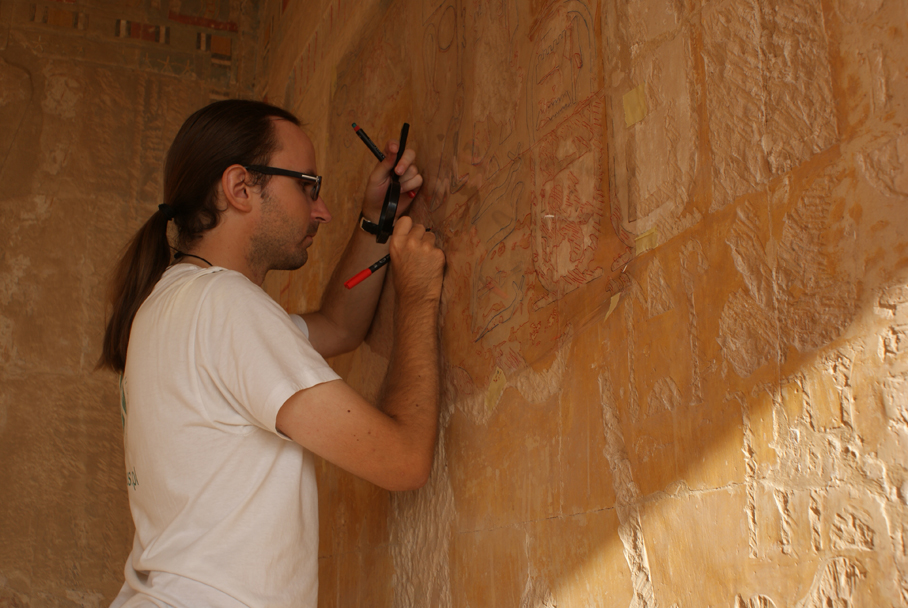
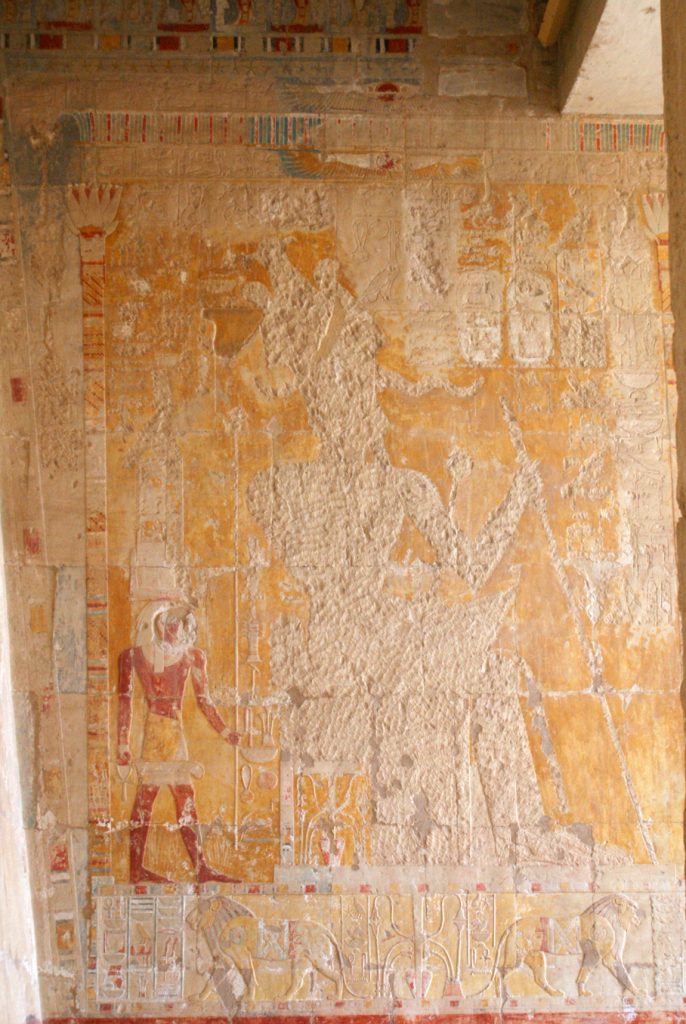
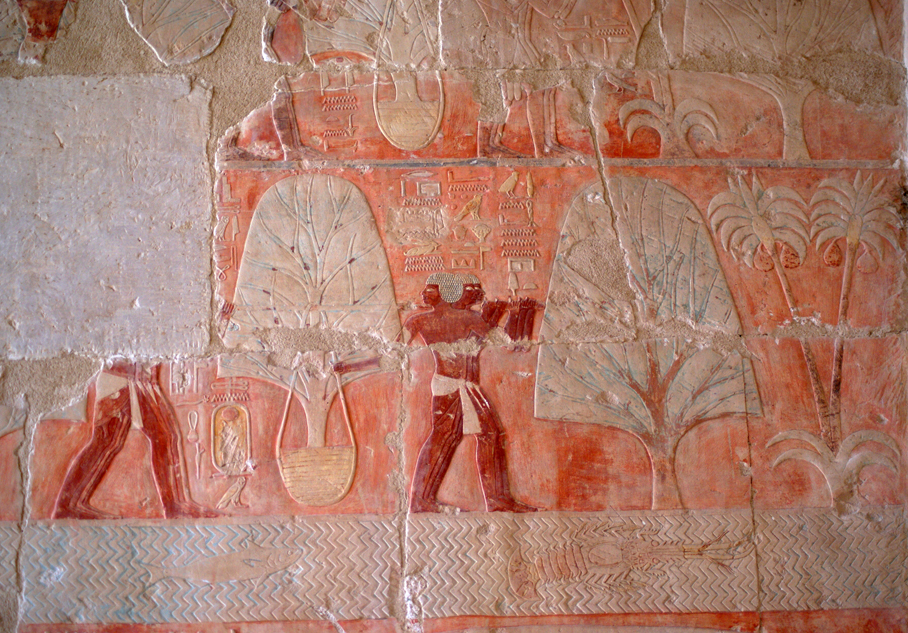
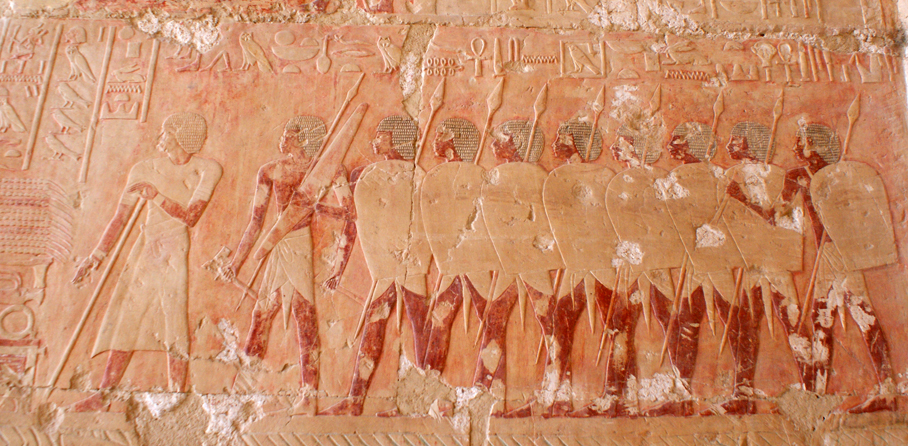
The project was launched in November 2014. Its aim is to document and republish the texts and depictions describing the expedition to the lands of Punt, which Hatshepsut organised in the ninth year of Thutmose III’s reign. She ordered an account of this expedition to be inscribed on the walls of the Middle South Portico (also known as the Portico of Punt) in her Temple of Millions of Years at Deir el-Bahari.
The first stage of the work involves creating 1:1 scale drawings on film, which will serve as the basis for producing digital drawings. These drawings, together with detailed photographs, will form the basis for the planned publication, supplemented by a detailed Egyptological commentary.
One of the main issues being investigated by the project is the precise location of the land of Punt, which remains a matter of dispute amongst scholars: some place Punt in Africa (south-eastern Sudan, Eritrea, Somalia), whilst others situate it on the Arabian Peninsula. No less controversial is determining the route the Egyptians took to reach Punt: although the latest research seems to suggest that the Egyptians travelled to Punt by sea from at least the Middle Kingdom onwards, there are still scholars who believe that the journey to Punt was made via the Nile, or, on occasion, by land. Thus, thanks to the new publication of reliefs from Hatshepsut’s temple, it will be possible to re-examine both of these issues.
A further aim of the project is to attempt to determine the role that expeditions to Punt played in Egyptian religion and the ideology of royal power, chiefly, though not exclusively, during the reign of Hatshepsut. It appears, however, that the organisation of a peaceful expedition to Punt was not, contrary to common belief, the result of Hatshepsut’s aversion to any form of military action, but rather an attempt to revive ancient traditions from the Old and Middle Kingdoms. In this context, the connections between the land of Punt and the principal deities of the Egyptian pantheon—Amon-Ra and Hathor, who were regarded as the rulers of that distant land—deserve particular attention. Furthermore, the aim of the project is to determine the function that the Central South Portico was intended to fulfil within Hatshepsut’s temple itself, and in particular its relationship with other porticos, primarily the Central North Portico (also known as the Portico of Divine Birth).
The project is led by Filip Taterka. The project is partly linked to his doctoral thesis, Les expéditions au pays de Pount sous la XVIIIe dynastie égyptienne, supervised by Rafał Koliński (Adam Mickiewicz University in Poznań) and Pierre Tallet (Université Paris IV-Sorbonne in Paris).
Project Director: Filip Taterka
Contact: aragorn2@interia.pl